By Adam Bluestein, Beth Braverman, Jenny Everett, Alexis Jeffries, Jessica Levine, Sarah Max, Christopher Reardon, Donna Rosato, and Pieter van Noordennen
If you're looking for a great place to raise a family with a healthy job market, these charming towns should be at the top of your list.
These days, when you think about a great place to live, what’s the first thing that pops into your head? Right: the economy. In a recent CNNMoney.com poll of more than 43,000 people, respondents named availability of good jobs as their most important concern when sizing up a town.
That finding guided the methodology that MONEY used to identify the 100 best places to live in America. Using statistics from data provider Onboard Informatics, MONEY crunched the numbers in order to zero in on America's best small towns for families—those with populations of 8,500 to 50,000.
The winners were chosen by measuring and weighting the factors that Americans value most. According to the CNNMoney poll, after good jobs, the key criteria are low crime, affordable homes, lots to do, and top-notch schools. Also factored in: data on health care, diversity, weather, and more.
The top-ranked towns not only rack up terrific scores but also possess that indefinable something—a mix of community spirit, can-do attitude, and simple charm—that makes them magnets for people looking for a great little place to raise their families.
The new No. 1?
 Courtesy: City of Louisville |
Top 100 rank: 1
Population: 18,800
Typical single-family house: $325,000
Estimated property taxes: $1,590
Unemployment rate: 6.0% (county)
Fun fact: Rail service to Boulder and Denver is scheduled to begin in 2017.
Pluses: Hiking, biking, golfing, skiing…
Minuses: No major negatives (That’s why it’s No. 1!)
Some towns nestled along the Rockies are full of pretentious eco-hipsters. Not Louisville. Ice cream shops dot the historic downtown. Families grab burgers at the cozy Waterloo Café. A Friday-night street fair, with a beer garden, live music, and games for the kids, runs all summer. No wonder this down-to-earth town has appeared high on Money's Best Places list before--and on many others.
It's also weathering the economic downturn well. Robust industries in the area, such as high tech, energy, and health care, make county unemployment among the lowest in the state.
But the top reason residents give for moving here? The great outdoors. Louisville is laced with nearly 30 miles of trails, Rocky Mountain National Park is less than an hour away, and eight world-class ski resorts are within two hours. The town's schools are highly rated as well.
Add in dry, clear weather, little crime, good health care, and low taxes, and Louisville is pretty tough to beat.
 Courtesy: City of Chanhassen |
Top 100 rank: 2
Population: 23,700
Typical single-family house: $310,000
Estimated property taxes: $3,500
Unemployment rate: 6.1%
Fun fact: The musician Prince owns a recording studio in town.
Pluses: Low crime, fiscal strength, lots of green space
Minuses: Scant nightlife, brutal winters
Apparently Chanhassen never got the memo that it's supposed to be in a recession. Unemployment here was more than three percentage points below the national average in May, thanks to a broad jobs base in the Twin Cities area.
Property taxes have dropped every year in the past five, even as median home prices have crept up. And the town still boasts a perfect triple-A bond rating.
But Chanhassen has much more going for it than terrific numbers. "There's a genuine small-town feel," says Sarah Pinamonti, 41, who moved here with her husband, Rick, 43, in 2002. They've never regretted it. "We rarely have to leave town to have fun," says Rick.
No wonder: The town has 11 lakes, 34 parks, and the 1,047-acre Minnesota Landscape Arboretum. Come winter there's a carnival, ice-fishing contests on Lake Ann, and skating and hockey everywhere (town officials flood grassy areas to create outdoor rinks). Wimps beware: Those activities require braving temps that often dip into single digits.
 Courtesy: City of Papillion |
Top 100 rank: 3
Population: 22,200
Typical single-family house: $200,000
Estimated property taxes: $4,000
Unemployment rate: 4.5% (county)
Fun fact: 30% of the town is green space.
Pluses: Strong economy, affordable homes
Minuses: Lackluster downtown, little diversity
It's rare for a town to rack up great scores in both economic performance and housing affordability. This friendly community outside Omaha delivers both.
The May jobless rate in its county was less than half the national average, thanks to diverse area employers including Mutual of Omaha, TD Ameritrade, Union Pacific Railroad, and Con Agra. Within Papillion's borders are Alegent Health and InfoUSA.
What's more, Papillion has acres of open space, traffic jams are unheard of, and parents feel comfortable letting their kids ride bikes unsupervised.
The knocks on Papillion used to be a tired-looking downtown and few things to do. But the town has been working hard to fix both problems. It is $750,000 into a multiyear downtown revitalization project that includes new sidewalks and antique lighting. Last year the town opened Sumpter Amphitheater, a $1.5 million performing arts center that hosts free movies, concerts, and wine tastings. And a new AAA baseball stadium is planned for 2011.
 |
Top 100 rank: 4
Population: 16,900
Typical single-family house: $350,000
Estimated property taxes: $6,000
Unemployment rate: 5.9% (county)
Fun fact: Mattel’s American Girl brand is based here.
Pluses: Small-town charm close to big-town amenities
Minuses: Brrr!
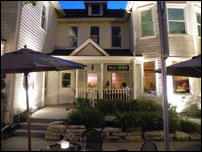
Residents of Middleton, which ranked No. 1 on Money's 2007 Best Places list, are just 7 miles from Madison -- Wisconsin's cosmopolitan capital. But they don't need to leave home to find things to do; Middleton has a downtown with plenty of restaurants, boutiques, and small businesses.
Newer developments--including Greenway Station, a hub for upscale retailers and restaurants, and Middleton Hills, a mixed-use community inspired by the designs of Wisconsin native Frank Lloyd Wright--have been thoughtfully planned, folks who live here say.
As for the economy, Madison's major employers (the state government and one of the nation's largest state universities) are about as stable as you can get. And within Middleton, large employers include the University of Wisconsin Foundation and medical research development firm PPD.
The resulting tax base has helped the town maintain its top-notch school system and 1,000-acre network of parks, bike paths, and running and cross-country ski trails. That helps make the frigid winters more bearable.
5. Milton, MA
 |
Top 100 rank: 5
Population: 25,400
Typical single-family house: $460,000
Estimated property taxes: $5,400
Unemployment rate: 6.8%
Fun fact: All public elementary schools here offer French immersion starting in first grade.
Pluses: Good schools, short commutes, diversity
Minuses: Few restaurants or small businesses
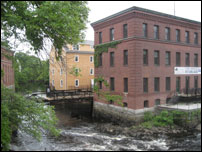
Just a few miles from downtown Boston, Milton is full of historic homes, tree-lined streets, and well-tended gardens, plus lots of parks and playgrounds.
There's a strong identity reflected in everything from the enthusiastic crowds at Milton High School's sports events (the basketball team was state champion in its division last year) to the sandwiches named for local landmarks and luminaries at G.H. Bent's Cookie Factory (built in 1891).
A vintage trolley whisks commuters to Boston's subway, and more than 5,000 jobs can be found right in town. Home prices rose a bit last year, and foreclosures are practically unheard of. Don't expect to score a housing bargain here.
Crime in Milton is low, but not nonexistent. A drive-by shooting occurred last summer and two people were killed by a troubled family member last March. "It's still an extremely safe place," says Tanya Frank, 34, who lives here with her husband, Paul McKnight, 35, and their two kids. "The police in Milton are great."
http://finance.yahoo.com/real-estate/article/107318/best-places-to-live-2009-edition.html?mod=realestate-buy


 The economy has been quite the thrill ride for Six Flags. The New York City-based amusement-park operator went belly-up in June, unable to spin off $2.4 billion in debt -- even on the Tilt-A-Whirl.
 This bargain basement may have passed on a few too many deals to its customers. Filene's Basement filed for Chapter 11 bankruptcy protection in May with assets of up to $100 million and liabilities of as much as five times that amount.
 The Washington-based clothing retailer, which is known for its mom jeans and rugged outdoor gear, filed for Chapter 11 bankruptcy protection in June.


 Posts
Posts


